By Lauren Carnahan听
In a crossover between science and art, students, staff and faculty from Vanderbilt, other universities and worked together on the shared goal of improving the ill-fitting hospital gowns that patients often wear. Initially proposed by Vanderbilt University School of Medicine student Noah Thompson Orfield, the idea was explored within the course Innovation Activism and Altruism, led by , director of entrepreneurship, biomedical innovation and the NSF Mid-South I-Corps Hub at . The Wond鈥檙y鈥檚 was involved in the process.听听
鈥淚 was bothered by the number of patients I saw in ill-fitting hospital gowns that exposed them to the world,鈥� Orfield said. 鈥淲e started talking with about how to use the FAB Lab space to design clothing that encourages autonomy, trust and compassion while also respecting the uncertainty, vulnerability and grief that come with hospitalization.鈥�
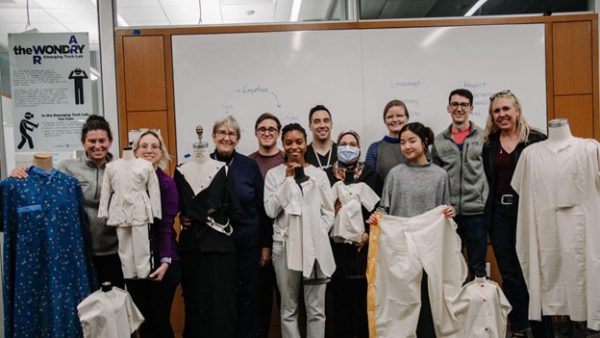
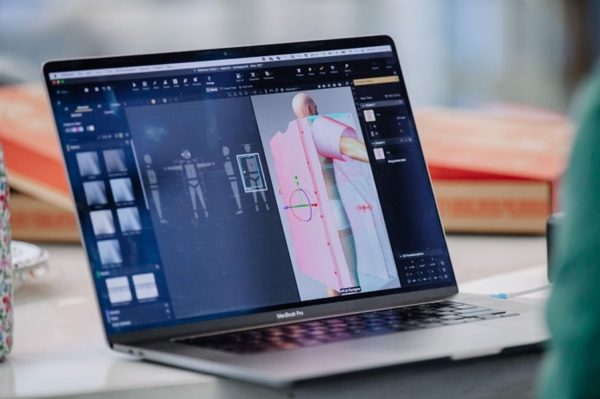
Orfield鈥檚 team used discussions with patients to identify the core problems with traditional hospital gown design. To enhance the design process, , director of design technology at , was brought in to the workshops to provide assistance with , a 3D software program used to capture each team鈥檚 concepts and to provide full-scale patterns that can be used for prototypes.
鈥�Seeing the designs in 3D form brought them to life and let me see the practicality of it,鈥� sophomore Amarachukwu Iyke-Osuji said. All students received a 3D rendering of their prototype upon completion of the workshop.听听
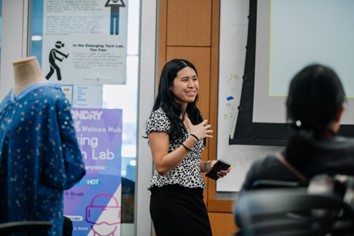
More than 20 people engaged in the prototyping design sprint workshops. They received additional insights from guest speakers, including , associate professor of neurology at VUMC and a board-certified neurologist. She read about hospital gowns, which appeared in the journal Anesthesiology last year. Vice Chancellor for Outreach, Inclusion and Belonging and Chief Diversity Officer for Vanderbilt University听 attended and shared some of his knowledge of fashion history. He also led a discussion with participants on how clothing can affect someone鈥檚 sense of self.听听
This collaboration between areas, and between the fields of art and science, was inspiring, according to participants. 鈥淵ou rarely get to see that blend between art and medicine as well as active problem solving,鈥� Vanderbilt student Gina Yu said.听听听听听
At the end of the design sprints, the participants presented their work to attendees, including , assistant professor of clinical medicine and a member of the for the VUMC Section of Hospital Medicine. 鈥�Designing in a vacuum, without insight into why a hospital gown needs to be designed in particular ways, is not productive. Giving the students immediate, hands-on feedback was essential to the process and product of the design sprints,鈥澨�, the FAB Lab director, said.
Each team made the most of the strengths, talents, insights and ideas that members brought to the project, and their final presentations demonstrated this hard work and collaboration. Wond鈥檙y workshops are intended to produce inclusive innovation among fields, backgrounds, tools and experience, something that resonated with the participants.听听
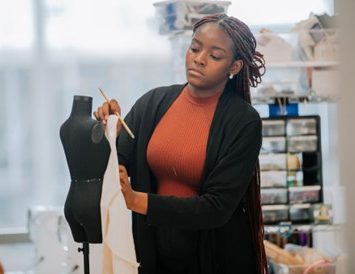
鈥淪eeing how different people from different sectors contributed to this project was eye opening and inspiring. It showed me that everyone’s input is useful and unique. We had doctors, designers and engineers on this project, and everybody had an important role to play,鈥� Iyke-Osuji said.听
Plans are being made to create full-scale prototypes of the teams鈥� designs and present them to doctors and nurses for feedback and testing. The goal is to make gowns that will be worn by testers, so their feedback can influence future prototypes.听听
鈥淭here were definite improvements with real-world implications,鈥� Buckley said. 鈥淗owever, once a design can be identified as the best possible candidate, another stage of innovation will be required. To break into this niche market, some production and entrepreneurial cycles of innovation will be needed鈥攍uckily we have the capacity to assist through this entire continuum at the Wond’ry.鈥�听