By Jenna Somers
Vanderbilt of education and human development has long distinguished itself by putting innovative scholarship into practice, often through research-practice partnerships, community outreach and sharing evidence-based resources with practitioners. Peabody alumni do this, too, applying lessons learned at Peabody to careers in education, non-profit leadership, public policy, consultancy, data analytics and more. They extend the college’s mission into classrooms and communities around the world.
From strengthening education outcomes for students with the greatest need to shaping education policy, community development and clinical research, Savannah Higgins, MEd’24; Brooke Allen, BS’09, MEd’10; Welton Pride, MEd’23; Jordan Mareno, MEd’24; and Yingxian “Becky” Liu, MEd’23, show the impact of Peabody alumni and reveal how the blend of scholarship, mentorship, and practical experience across the college’s offers a strong foundation for careers that shape society.
Savannah Higgins, MEd’24, reading interventionist at Metro Nashville Public Schools

Savannah Higgins has always been driven by a simple belief: every child deserves a teacher who truly understands how they learn. When she was teaching fourth grade, she recognized how much her students could grow with deeper, more specialized support — and that recognition sparked a desire to expand her expertise. “I realized I didn’t know enough about how literacy actually develops to effectively help them, and that’s why I decided to become a reading interventionist,” Higgins says.
“I joined Vanderbilt’s program in because I knew it would give me that strong foundation in research about literacy development and open doors for me to do the work I wanted to do. If I didn’t go through Peabody’s program, it would have taken me longer to gain enough knowledge and experience to become a reading interventionist and to feel confident in this role.”

Higgins now works as a reading interventionist at Tusculum Elementary School in Metro Nashville Public Schools, where she leads small groups of up to six students each day for 45 minutes of intensive, specialized instruction focused on phonics and reading comprehension.

“My master’s program gave me a mental map of what literacy development looks like,” Higgins says. “Now, when I identify the skill a student is struggling with, I know where that skill falls in the spectrum of literacy development, and I know what approach to take with that student.”
Higgins’ confidence in her capacity as a reading interventionist translates into her students’ confidence in themselves. One student who began the year quietly and hesitantly now volunteers to help her peers during intervention sessions nearly two years later. “I get emotional when I think about how much she’s grown,” Higgins says, “not just in literacy and academics, but in her belief in herself. That’s why I love this job.”
Her third-grade group, most of whom are ESL learners, has made remarkable strides. At the start of the year, they were building foundational decoding skills. By mid-year, they were reading consonant-vowel-consonant words and words with consonant blends. “They went from looking at a simple sentence and having no idea what to do with it, to reading short stories and understanding them,” Higgins says.
The growth of her students reminds Higgins of the most important lesson she learned at Peabody: “Get to know every child you teach. Know their background, their culture, their language,” Higgins says. That philosophy shapes her instruction every day. “We’re talking about the ‘TH’ digraph right now with my third graders. It makes two sounds in English that do not exist in most Latin-American Spanish dialects, so I knew this was going to be a challenging lesson for them.”


Beyond the lessons of the reading education program at Peabody, Higgins appreciates how the lessons of individual faculty members show up in her classroom. Professor emphasis on testing at different times using a variety of assessments helps build a comprehensive portrait of a child’s strengths and needs. Professor lessons on critiquing scripted curricula helps to understand children’s strengths and areas for improvement. Higgins also fondly remembers the confidence of Professor in the program’s students, the same confidence that Higgins has in hers.
“I am grateful to everyone I learned from at Peabody,” Higgins says. “If any teachers want to teach literacy well or become a reading interventionist, Peabody’s program is for you. Go for it!”
Brooke Allen, BS’09, MEd’10, founder and executive director of the Diverse Learners Cooperative
 From a young age, Brooke Allen wanted to be a special education teacher. In elementary school, she appreciated the challenge of figuring out how to communicate with her deaf friend and how it made their bond stronger.
“When it came time to go to college, I visited Vanderbilt with my mom, and once we were there, I said, ‘Okay, mom, this is where I want to go.’ The decision was about joining the best special education program in the country,” Allen says.
A proud Double ’Dore, Allen earned her bachelor’s degree in special and elementary education with a minor in education of the deaf and a master’s degree in and English learner education.
During her time at Vanderbilt, Allen completed teacher training practicums at multiple schools throughout Nashville, which opened doors to teaching and leadership opportunities following graduation. She has been a special education middle school teacher, a director of student supports and an educational consultant. These experiences and many conversations with other special education teachers made Allen realize her profession was hindered by a problem that she could solve.
“Special education and English learner teachers needed more tailored professional development opportunities and resources, a network to connect with each other and with relevant coaching experiences. That’s why I founded the Diverse Learners Cooperative,” Allen says.
For the past 8 years, the Diverse Learners Cooperative has supported school teams to better serve students with disabilities and multilingual learners by providing coaching, resources and professional development opportunities. More than one hundred teachers have gone through the DLC’s Teacher Leadership Fellowship, a fully-funded, year-long program that empowers teachers to transform special education and English learner education within their classrooms and schools.
At the end of the year, fellows present an impact project at an expo event in front of family, school teams and community members, demonstrating how they tackled a problem of practice within their classrooms and schools and celebrating solutions to difficult problems. “It’s a joy to hear from teachers who say, ‘I wouldn’t have made it through this year without the DLC,’ or ‘This impact project made my job so much more meaningful,’” Allen says. “Our mission centers on teacher retention, and that’s what this fellowship is about. Teacher persistence translates directly into better outcomes for the students who need consistency most.”
The DLC also partners directly with schools to address specific issues, such as promoting positive student behavior and creating environments that are more reflective of learner variability.
When Allen reflects on the impact of the Diverse Learners Cooperative, she also thinks about the value of her Peabody education and the faculty who have played an influential role in her professional life.


“I learned so much from , , and others at Peabody about how to think about teaching and supporting students’ needs,” Allen says. “We definitely need more Vanderbilt-trained teachers in our schools.”
Welton Pride, MEd’23, economic and housing policy manager at the National Urban League

Growing up in Nashville, Tennessee, Welton Pride saw the daily progress of the city’s booming development, but he also witnessed native Nashvillians, who once lived in devalued neighborhoods, priced out of those communities, and others—victims of the 2010 flood and 2020 tornado—targeted by predatory homebuyers with low-ball offers. With these contrasting views in mind, Pride wondered, “How can Nashville develop equitably, so that it works for all residents?”
This question and Pride’s early experiences influenced his educational and professional life. He earned his master of education in and has held private development and leadership positions at non-profit organizations and the U.S. Department of Housing and Urban Development.
As the manager of economic and housing policy at the National Urban League, Pride translates federal policy into action across 94 NUL affiliates in 36 states. Based in Washington, D.C., he acts as a liaison between affiliates, policymakers and federal agencies. He also advocates for policies that support the needs of local communities, such as increasing the supply of affordable and sustainable housing, improving access to capital for small businesses and promoting homeownership to build wealth.
“Advocating for communities all over this country at a national level gives this work purpose. I feel like I have a true impact in the work I’m doing,” Pride says.

In the Biden-Harris Administration, Pride was the special advisor in the Office of the Deputy Secretary at HUD. He conducted research for policy proposals, drafted briefs and memos, wrote speeches and coordinated meetings between HUD and policymakers on Capitol Hill. He also managed the operations of the office.

Among his most meaningful work at HUD, Pride organized a roundtable discussion and check presentation at Tennessee State University, which had received a $1.3 million-dollar competitive research grant from HUD to become a .
“This hit home for me. My father and sister graduated from TSU. My home church is right up the street from campus. I’ve been involved in this community for so long. Being able to bring together leaders from all my different networks showed me organizational development from every level and put into practice everything I learned about community organizing and development while studying at Vanderbilt,” Pride says.
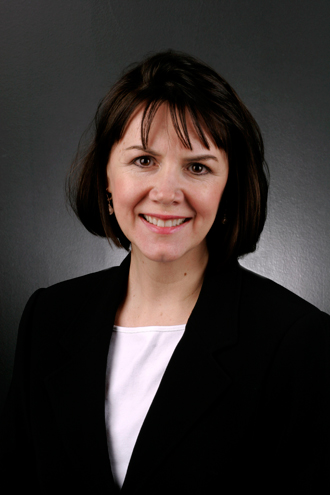
Prior to joining HUD, Pride volunteered with Americorps on the Nashville Promise Zone, a HUD-designated initiative. At an NPZ event, Pride met Professor , who introduced him to Peabody’s community development and action program and eventually became an advisor for one of his courses. Pride’s graduate practicum focused on the Collective Impact Model upon which the Nashville Promise Zone was built.
“There was alignment between my volunteer, education and professional experiences that made working at HUD a full-circle moment,” Pride says.

Pride attributes much of his career to lessons learned in Peabody’s CDA program, and he notes that its flexibility allowed him to design his studies to align with his professional interests. “You can kind of make your own degree in the CDA program,” he says, having taken public policy and community development theory courses as well as courses within other Vanderbilt programs.
“Someone in your cohort might focus on housing and community development from a real estate and economic development standpoint, while someone else focuses on social justice and sustainability, and another looks at issues from a theological perspective or even an artistic lens. It allowed us to see problems from different perspectives,” Pride says.
Examining human development and its role in organizational change, he adds, “has been critical throughout my career in working with a range of community leaders and policymakers.”
Jordan Mareno, MEd’24, associate at the Education Strategy Group

From a young age, Jordan Mareno learned the value of a college education. Her father, a first-generation college graduate, made sure of that. “The importance of going to college was one of the loudest messages in my household. I had a very clear view into what my dad’s own college degree did for him and how it changed his life,” Mareno says.

As a consultant at the Education Strategy Group, Mareno keenly understands that higher education is at an inflection point, facing demographic decline and concerns about affordability and value. Amidst these tensions, ESG works to expand pathways to economic mobility by increasing educational attainment and aligning education systems with workforce demands.
Mareno focuses on post-secondary transitions—the nebulous space that awaits students after high school. For example, in the Great Admissions Redesign project, sponsored by the Lumina Foundation, she supports states to transform the way students apply to and enroll at colleges and universities, with the goal of removing barriers to application and admissions processes and streamlining financial aid access. “At this point, if a state is not doing some kind of admissions redesign, then they are already behind,” Mareno says.

She also coaches state agencies, conducts policy research, and advises philanthropic partners on emerging opportunities for impact and investment. Across her portfolio, she appreciates the impact of her education at Peabody, where she earned her master of education in higher education administration. “I took a strong turn into the policy direction and thinking on a systems level because of the great minds at Peabody who inspired me,” Mareno says.

For example, lessons from program evaluation class inform Mareno’s support of grantee organizations who submit logic models as grant deliverables. classes taught Mareno to ideate and articulate policy recommendations in white papers and briefs. leadership in shaping higher education policy as director of the Tennessee Higher Education Commission inspired Mareno’s thinking about frameworks for systems change and helped her establish connections with colleagues at THEC and the Tennessee Board of Regents.


In thinking about the state of higher education and the lessons she learned at Peabody, Mareno advises current and future students to enter graduate studies “with the intention to become someone who leads innovative change. Because if you intend to learn about and only work within current systems, then you are already participating in an outdated system.”
That conviction shaped how Mareno approached her own graduate education, where her decision to attend Peabody was equally deliberate. “I grew up in North Carolina and wanted to have an impact on communities in the Southeast,” Mareno says. “My experience at Peabody deepened my connection with Nashville, my identity as a Southerner and my belief in the Southeast as a locale where we can incubate change, be innovative and lead in key aspects of education policy. That might not be the first thing that comes to mind when people think about Tennessee, but it should be.”
Yingxian “Becky” Liu, MEd’23, research analyst at HCA Healthcare

After earning her bachelor’s degree in psychology at Beijing Normal University, Becky Liu worked in education for several years as a teacher, administrator and researcher. Through this experience, she became increasingly interested in data analysis. “I found myself drawn to the analytical side of my work. It’s more rational, organized and structured, which fits my personality and gives me a sense of purpose,” Liu says.
Eager to pivot to a career in statistics and data analysis, Liu began exploring universities and programs. She felt Peabody’s quantitative methods program (now the M.S. program) was exactly what she was looking for after speaking with friends and an alumnus in the program. It combined her interests in psychology and data analysis and offered graduates the ability to apply their data analytics education to a range of fields, such as education, finance and healthcare.
Today, Liu works as a research analyst in the Graduate Medical Education Department at HCA Healthcare, where she serves as a statistician collaborating with medical residents and faculty at HCA hospitals conducting clinical research. She guides them through the full research cycle, from refining research questions and hypotheses, to gathering and cleaning data, to conducting statistical analyses, drafting reports and supporting publications.
While her coursework in advanced statistical theories, such as regression, multilevel modeling and nonparametric statistics, continues to serve her daily, Liu says, the real-world data analysis experience she gained at Vanderbilt proved invaluable in landing and excelling at her current position. During her second semester, she interned as a data analyst at Vanderbilt University Medical Center, and in her third semester, she enrolled in Statistical Consultation, where student groups collaborated with external researchers on their projects.
“Industry positions typically require at least one year of relevant experience,” Liu says, “For new graduates, these types of course projects and internships count as relevant experience and are critical in securing employment.”
Beyond taking advantage of these hands-on experiences, Liu advises students interested in the new M.S. program to set clear professional goals—whether that’s working in industry or pursuing a Ph.D.—and to plan courses and internship opportunities that align with those goals. She also encourages students to take advantage of Vanderbilt’s resources, such as free library courses that allowed Liu to refine her skills in programming applications like R and Python.
As Liu reflects on her career journey from working in education to working as a research analyst at HCA, she appreciates the pivotal role of her Peabody education. “Early on, I felt like I could be good working with data,” Liu says, “But Peabody gave me the skills and confidence to pursue my passion and find a meaningful career.”
A shared foundation for confident, empathetic expertise
What unites Higgins, Allen, Pride, Mareno, Liu and countless Peabody alumni like them is not a single career path, but the shared foundation of a Peabody education that emphasizes rigorous scholarship, transformative mentorship and practical application, allowing graduates to lead in diverse professions as confident, empathetic experts. As Peabody continues to offer new programs, graduates will remain competitive for in-demand roles across a range of industries and educational contexts and be able to leverage their knowledge to make an immediate impact.
Through the new , Vanderbilt alumni can receive a guaranteed 20 percent tuition discount to earn a at Peabody College of education and human development. Vanderbilt seniors who sign up for are also eligible. Learn more.